Excellent!
You got 16 of 20 correctly.
- 48 Points Won
- 80% Correct answers
- 9 Best streak
Check your Stats
Go to DashboardCheck your Stats
Go to Dashboard- 1 / 20
What did the original 1979 Walkman play?
- CDs
- Cassettes
- Floppy Disks
- MP3s
The Walkman was first created because Sony co-founder Masaru Ibuka wanted to be able to listen to music on long flights. The first model of the Sony Walkman, the TPS-L2, was released in 1979, and it proved to be a huge hit. The original Walkman played cassette tapes. The president of Sony, Akio Morita, hated the name Walkman but advertising for it had already been released, and it would have been too expensive to change!
Source: Design Museum
- 2 / 20
Which of these is another name for a diskette?
- Floppy disk
- Walkie-talkie
- CRT
- Polaroid
A floppy disk or floppy diskette (casually referred to as a floppy or a diskette) is a type of disk storage composed of a thin and flexible disk of a magnetic storage medium in a square or nearly square plastic enclosure lined with a fabric that removes dust particles from the spinning disk. Floppy disks store digital data which can be read and written when the disk is inserted into a floppy disk drive (FDD) connected to or inside a computer or other device.
Source: Wikipedia
- 3 / 20
What device was used to dial numbers on early rotary phones?
- Carousel
- Phone wheel
- Reel
- Rotary dial
A rotary dial is a component of a telephone or a telephone switchboard that implements a signaling technology in telecommunications known as pulse dialing. It is used when initiating a telephone call to transmit the destination telephone number to a telephone exchange. On the rotary dial, the digits are arranged in a circular layout, with one finger hole in the finger wheel for each digit. For dialing a digit, the wheel is rotated against spring tension with one finger positioned in the corresponding hole, pulling the wheel with the finger to a stop position given by a mechanical barrier, the finger stop.
Source: Wikipedia
- 4 / 20
Which of these is often credited with the invention of the telephone?
- Thomas Edison
- Alexander Graham Bell
- Eli Whitney
- John Logie Baird
Alexander Graham Bell (born Alexander Bell; March 3, 1847 – August 2, 1922) was a Scottish-born inventor, scientist, and engineer who is credited with patenting the first practical telephone. He also co-founded the American Telephone and Telegraph Company (AT&T) in 1885. Many other inventions marked Bell's later life, including groundbreaking work in optical telecommunications, hydrofoils, and aeronautics. Bell also had a strong influence on the National Geographic Society and its magazine while serving as the second president from January 7, 1898, until 1903.
Source: Wikipedia
- 5 / 20
Before computers, which of these machines was used to type letters?
- Letters machine
- Typewriter
- Laptop
- iPad
A typewriter is a machine that produces letters on paper when the user strikes a key, which, in turn, forces a steel type to hit a ribbon and transfer ink from that ribbon to the paper. Typewriters were regularly used from the late 1800s until the late 1900s, when computers gained in popularity. The invention of various kinds of typing machines was attempted in the 19th century. Most were large and cumbersome, some resembling pianos in size and shape.
Source: Britannica Kids
- 6 / 20
What was the compact cassette also known as?
- Media tape
- Philips tape
- Analog tape
- Cassette tape
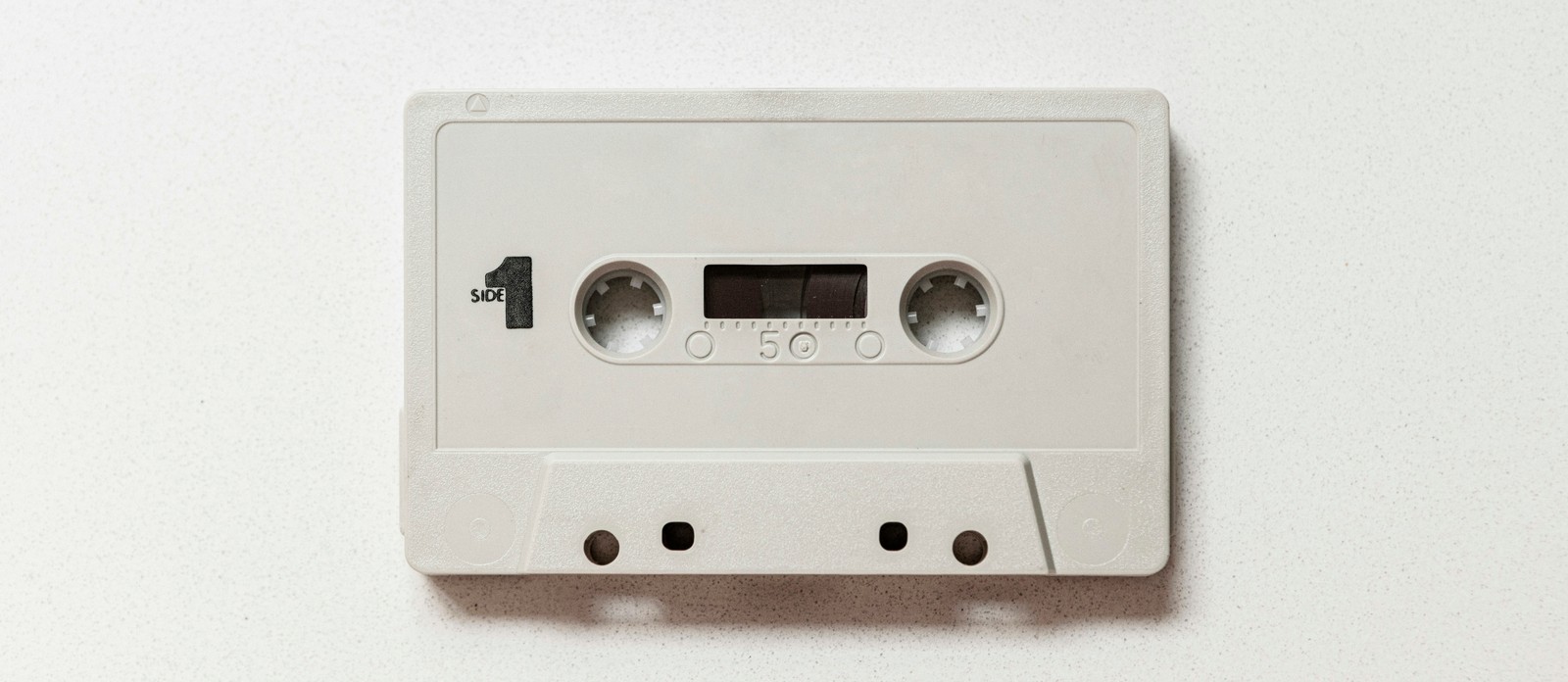
The compact cassette, commonly known as a cassette tape, is an analog media format developed in 1962 by the Dutch inventor and engineer Lou Ottens for the Philips Company. Initially marketed for dictation, the cassette tape was notably smaller than a pack of cigarettes, with a capacity for significant data storage, making it a suitable format for pre-recorded music. The cassette tape became the standard audio format from the late 1970s to the early 90s.
Source: New York Public Library
- 7 / 20
Which coin-operated music-playing device was popular in the 20th century?
- MiniDisc
- iPod
- Jukebox
- Walkman
The jukebox was invented in 1889. It was created by Louis Glass and William S. Arnold, who combined Edison’s phonograph with coin-operated technology to create an automatic music-playing machine that could play individual selections on demand. The jukebox quickly became popular in public places, such as bars and restaurants, and helped introduce people to a wide range of music styles, from classical to popular songs. The jukebox became an iconic symbol of American popular culture in the 20th century and continues to be a nostalgic reminder of the golden age of music.
Source: The Golden Age of Rock
- 8 / 20
Which Japanese electronic toy did you have to care for like a pet?
- Roomba
- Tamagotchi
- Super Nintendo
- Atari
Tamagotchi, translated to Egg Watch in English, was the first product to start the handheld digital pet craze in the mid to late 90s. A Tamagotchi was a 2″ small egg-shaped computer that could fit into your pocket. What seemed like a game was more of a test of your ability to care for a small alien pet. No matter what Tamagotchi you had, it was a needy little critter that required almost constant attention to keep it healthy. Every Tamagotchi needed to be fed, played with, nurtured, and disciplined like a real pet.
Source: 90s Toys
- 9 / 20
What was Sony's brand name for portable CD players?
- Porta disc
- Mash
- MD
- Discman
Discman was Sony's brand name for portable CD players. The first Discman, the Sony D-50 or D-5 (depending on region), was launched in 1984. The brand name changed to CD Walkman, initially for Japanese lineups launched between October 1997 and March 1998, and then entirely in 2000. Discman and CD Walkman players are no longer produced.
Source: Wikipedia
- 10 / 20
"Wireless telegraphy" was the original name for which technology?
- Fax
- Television
- Radio
- Cellphones
The Morse telegraph transformed human communication in the mid-19th century by making it possible, for the first time, for humans to communicate instantly across long distances, via signals traveling between two points connected by wire. In the later years of the century, as the dream of telecommunication without direct wire connection was beginning to come true, the vision was still tied to the Morse code telegraphic model. In practice, the technology that was being developed to enable “wireless telegraphy” would eventually come to be called radio communication and finally result in broadcasting, which would lead to unimaginable technologies.
Source: MIT Libraries
- 11 / 20
What was the technology behind old tube TVs called?
- CCTV
- CRT
- VHS
- BETA
A CRT TV is a type of CRT television that was most widely used back before the invention of the flat-screen television. CRT stands for cathode ray tube. There are actually a number of different types of cathode ray tubes, but they all are similar in many ways. The CRT in a CRT TV is the cathode ray tube, which is essentially a vacuum tube that contains one or more electron guns as well as a fluorescent screen that is used for viewing images. It has a way of accelerating and deflecting electron beam(s) onto television screens in order to create the actual images.
Source: All Green Recycling
- 12 / 20
Which 1950s invention was first referred to as "The Flashmatic"?
- Dishwasher
- Instant camera
- Blender
- Wireless remote control
In the 1950s in the US, Zenith Electronics president Eugene F McDonald gave the company’s engineers a challenge: he hated having to sit through ads. He wanted a device that could let him mute them, or skip to another channel. The wireless remote control as we know it was born. Zenith’s game-changing device was called the Flashmatic, designed by an engineer called Eugene Polley and released in 1955.
Source: BBC
- 13 / 20
What was invented by Guglielmo Marconi?
- Telephone
- Internet
- Television
- Radio
Guglielmo Marconi (25 April 1874 – 20 July 1937) was an Italian inventor and electrical engineer, known for the creation of the practical radio wave-based wireless telegraph system. This led to Marconi being credited as the inventor of the radio, and he shared the 1909 Nobel Prize in Physics with Karl Ferdinand Braun "in recognition of their contributions to the development of wireless telegraphy".
Source: Wikipedia
- 14 / 20
What was the formal name of the 8-track tape?
- Cassette player
- Record player
- Super 8
- Stereo 8
The 8-track tape (formally Stereo 8; commonly called eight-track cartridge, eight-track tape, and eight-track) is a magnetic-tape sound recording technology that was popular from the mid-1960s to the early 1980s, when the compact cassette, which pre-dated the 8-track system, surpassed it in popularity for pre-recorded music. The format was commonly used in cars and one advantage of the 8-track tape cartridge was that it could play continuously in an endless loop, and did not have to be "flipped over" to play the entire tape.
Source: Wikipedia
- 15 / 20
Which of these was a rival of the VHS video cassette format?
- Floppy Disk
- Long Play
- Betamax
- Dubplate
Betamax (also known as Beta, as in its logo) is a consumer-level analog recording and cassette format of magnetic tape for video, commonly known as a video cassette recorder. It was developed by Sony and was released in Japan on May 10, 1975, followed by the US in November of the same year. Betamax is widely considered to be obsolete, having lost the videotape format war which saw its closest rival, VHS, dominate most markets. Despite this, Betamax recorders continued to be manufactured and sold until August 2002, when Sony announced that they were discontinuing production of all remaining Betamax models. Sony continued to sell Betamax cassettes until March 2016.
Source: Wikipedia
- 16 / 20
Which 1940s device featured a reel of stereoscopic images?
- Show'N Tell
- Fantascope
- View-Master
- Cosmorama
View-Master is the trademark name of a line of special-format stereoscopes and corresponding View-Master "reels", which are thin cardboard disks containing seven Stereoscopic 3-D pairs of small transparent color photographs on film. It was originally manufactured and sold by Sawyer's. The View-Master system was introduced in 1939, four years after the advent of Kodachrome color film made the use of small, high-quality photographic color images practical. Tourist attraction and travel views predominated in View-Master's early lists of reels, most of which were meant to be of interest to users of all ages. Most current View-Master reels are intended for children.
Source: Wikipedia
- 17 / 20
What was the name of the first successful roll-film hand camera?
- The Kodak
- DS-1P
- Camera obscura
- Model 95
The first successful roll-film hand camera, the Kodak, was launched publicly in the summer of 1888. Inventor George Eastman received a patent (number 388,850) for the camera’s shutter and the trademark (number 15,825) for the Kodak name on September 4, 1888. The immediate triumph of the camera prompted Eastman to change the name of his company from Eastman Dry Plate and Film Company to Eastman Kodak Company in 1892.
Source: Eastman Museum
- 18 / 20
Which of these devices for taking photographs was invented first?
- Polaroid
- Kodak Roll Film
- SLR cameras
- Camera obscura
Hundreds of years of advancements in chemistry and optics led to the invention of the camera obscura, which enabled the first photograph to be taken. That photograph was taken in 1826 by French scientist Joseph Nicéphore Niépce, at his family’s country home, Le Gras. By exposing a bitumen-coated plate in a camera obscura for several hours on his windowsill, Niépce created a photograph showing a courtyard and outbuildings.
Source: Pixsy
- 19 / 20
What inanimate object was TIME's "Man of the Year" in 1982?
- Camcorder
- Computer
- Walkman
- Calculator
Breaking from tradition, "The Computer" became the first inanimate object to receive the annual "Person of the Year" (or in this case, "Machine of the Year") award presented by US news magazine Time, claiming the accolade for the year 1982. A representation of a personal computer (PC) appeared on the cover of the 3 January 1983 end-of-year edition of the publication. Although referencing the rise of the PC in general (PC sales went from 724,000 in 1980 to nearly 3 million in 1982), the accompanying article focused on the "Lisa" computer (Apple's first PC with a graphical user interface), which would be released a few weeks after the magazine on 19 January 1983. The only other non-human recipient of the accolade to date is "Earth", which took the title in 1988.
Source: Guinness World Records
- 20 / 20
Albert Einstein once patented a design for what household appliance?
- Dishwasher
- Oven
- Toaster
- Refrigerator
Albert Einstein is best known to the general public for devising the world’s most famous equation: E=mc2. However, his contributions to physics extend over a broad range of topics, including Brownian motion, the photoelectric effect, special and general relativity, and stimulated emission, which led to the development of the laser. Less well known, even among physicists, is his work with Leo Szilard to develop an energy-efficient absorption refrigerator with no moving parts. Despite filing more than 45 patent applications in six different countries, none of Einstein and Szilard’s alternative designs for refrigerators ever became a consumer product, although several were licensed, thereby providing a tidy bit of extra income for the scientists over the years.
Source: American Physical Society